Indigenous Clean Energy Fund Commits Nearly $6M to 20 Tribal-Led Projects, Catalyzing Over $200M in Additional Capital
First portfolio-wide look at the Indigenous Power & Light Fund shows $4.7M deployed and $1.2M more approved, advancing

Press Release Disclaimer: This is a press release distributed through the XPR Media network. It has not been independently verified by our newsroom.
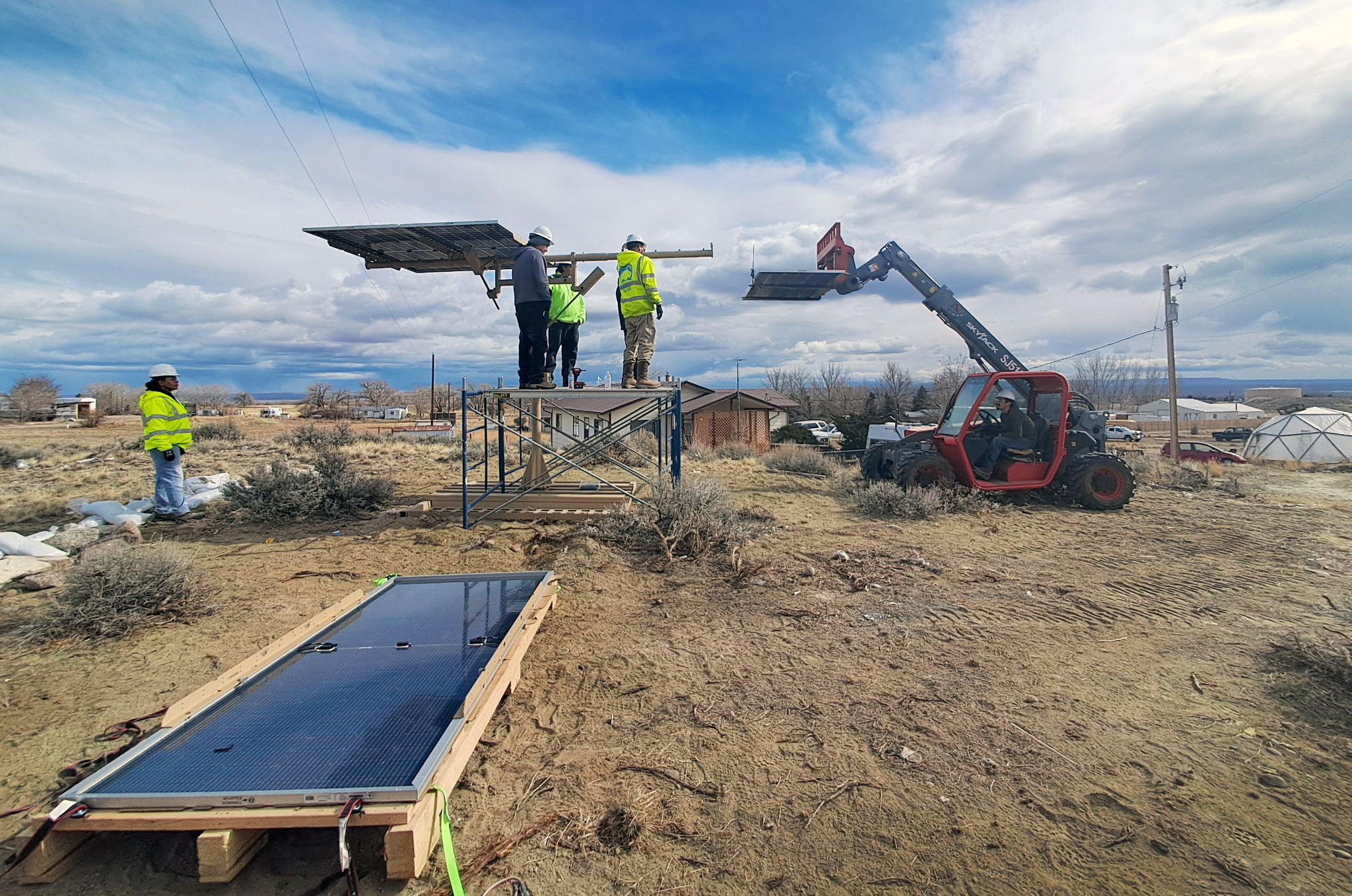

First portfolio-wide look at the Indigenous Power & Light Fund shows $4.7M deployed and $1.2M more approved, advancing energy sovereignty across nine states
WASHINGTON, DC, UNITED STATES, September 18, 2026 /EINPresswire.com/ — In its first two years, the Indigenous Power & Light Fund for Energy Sovereignty℠ (IPLF) has deployed $4.7 million in 17 Tribal-led clean energy projects that have catalyzed more than $200 million in additional funding and financing, with another $1.2 million in IPLF funding for three additional projects already approved and awaiting disbursement.
Next week at Climate Week NYC, the Alliance for Tribal Clean Energy will share for the first time a portfolio-wide look at the impact of its Fund and the Native American Tribes and Alaska Native Villages using these investments to advance their own clean energy, resilience and energy sovereignty priorities.
Across nine states, including four projects in Alaska, IPLF-supported projects represent:
• $5.9 million approved, including $4.7 million already deployed and another $1.2 million approved for deployment
• 17 awards across nine states
• More than $200 million in additional funding and financing catalyzed
• 12.6 megawatts of clean energy generation, enough to power roughly 2,150 homes
• 72 megawatt-hours of storage
The Fund was created in late 2024 to provide flexible, responsive capital at the points where Tribal clean energy projects often need it most. Awards averaging approximately $250,000 have supported construction, matching requirements, project development, equipment procurement, bridge financing and other critical project needs.
Through the Alliance for Tribal Clean Energy, Tribes and Alaska Native Villages can also access no-cost technical assistance, financial structuring, project development, education and workforce training support from concept through commissioning.
“Tribal Nations know what their communities need and what they want their energy futures to look like. What is too often missing is flexible capital that can move at the speed and in the form these projects require,” said Chéri A. Smith (Mi’kmaq Descendant), President and CEO of the Alliance for Tribal Clean Energy. “These communities bring the vision, leadership and determination. Our role is to help ensure that a funding gap, a piece of technical expertise or a financial structuring challenge does not unnecessarily stand between a Tribe or Village and the critical energy needs it has today — or the energy future it has chosen for itself.”
Across the portfolio, IPLF capital has been deployed in very different ways: closing construction and procurement gaps; supporting projects in communities dependent on expensive and polluting diesel or other fossil fuels; extending electricity to homes that have never had power; strengthening the resilience of clinics, schools, community centers, emergency facilities and communications systems; and advancing locally controlled renewable energy and storage.
While the circumstances differ from project to project, every investment supports a project owned and directed by the Tribe or Village it serves.
The IPLF’s first two years of investments include:
• Blue Lake Rancheria, California: A $500,000 award provides gap funding for the Rancheria’s expansion of its local microgrids into a coordinated, first-of-its-kind network that could ultimately be replicated by Tribal Nations across California.
• KIPI Radio, Cheyenne River Sioux Tribe, South Dakota: A $394,595 award supports a 100.92-kilowatt solar system powering KIPI Radio, which provides emergency weather warnings and other essential communications to thousands of people.
• Eastern Shoshone Tribe, Wyoming: A $500,000 award supports the Tribe’s work to bring electricity to off-grid homes, advancing household access to heat, safety and greater energy self-determination.
• Great Lakes Inter-Tribal Council, Wisconsin: A $300,000 award covers the full cost of a new solar system, lowering energy costs and allowing more resources to remain available for programs serving Native youth.
• Hoopa Valley Tribe, California: IPLF funding supports critical groundwork for a large-scale community microgrid, including permitting, legal and tax strategy, and project planning.
• Lac Courte Oreilles Ojibwe University, Wisconsin: A $200,000 award supports development of a solar-powered system expected to offset 89% of the University’s Extension Farm’s energy use while enabling year-round growing through Wisconsin winters.
• Menominee Tribe of Wisconsin: A $500,000 award supports development of a microgrid designed to provide locally controlled power to critical facilities, including the Tribe’s clinic and schools.
• Metlakatla Indian Community, Alaska: A $235,000 award provided time-sensitive gap funding for installation of a submarine power cable with integrated fiber optics, supporting Metlakatla’s ability to sell locally generated power to the City of Ketchikan and activate broadband technology for the Village.
• Shoshone-Bannock Tribes, Idaho: A $35,000 award supported capacity development through the Tribes’ Solar Trailer, providing hands-on solar education and demonstrations for Tribal staff and community members.
• Village of Port Heiden, Alaska: A $250,000 bridge financing award enabled the Village to order critical equipment for the community’s wind turbine project during the limited barge season.
• Yurok Tribe, California: A $500,000 award supports construction of a new community microgrid designed to improve energy reliably on the Upper Yurok Reservation and represents a major advancement toward energy sovereignty.
• Wozu, Inc., Cannon Ball, Standing Rock Reservation, South Dakota: A $74,000 award supports solar and storage for Wozu’s community hub, lowering energy costs so more resources can go toward food sovereignty, buffalo restoration, and land, cultural and social regeneration.
Together, these projects demonstrate the range of roles flexible capital can play in advancing Tribal energy priorities — from early-stage planning and equipment procurement to construction, bridge financing and completion of critical infrastructure.
Partnership is integral to this work. Each of these Tribal-led projects reflects collaboration among people and organizations within and beyond Indian Country that contribute capital, technical expertise, infrastructure and other critical support.
With more than $30 million in additional committed funds expected from philanthropic partners, IPLF is building toward $100 million in permanent, revolving capital designed to remain available to Tribal communities over the long term.
For information about supporting the Indigenous Power & Light Fund, contact Caliopy Glaros, Director of Philanthropy, at caliopy@tribalcleanenergy.org.
About the Alliance and IPLF:
The Alliance for Tribal Clean Energy is an Indigenous-led 501(c)(3) nonprofit offering catalytic funding and no-cost technical, financial and policy support for Tribal energy sovereignty. IPLF is an Alliance initiative in partnership with the Lemelson, MacArthur and Hewlett foundations. Learn more at indigenouspowerandlight.org.
Dr. Keri Bradford-Gomez
Alliance for Tribal Clean Energy
+1 202-281-0118
email us here
Visit us on social media:
LinkedIn
Instagram
Facebook
Legal Disclaimer:
EIN Presswire provides this news content “as is” without warranty of any kind. We do not accept any responsibility or liability
for the accuracy, content, images, videos, licenses, completeness, legality, or reliability of the information contained in this
article. If you have any complaints or copyright issues related to this article, kindly contact the author above.

Media gallery