
Why the Fed picked 2% as an inflation target
The Dispatch reports the Fed aims for a 2% inflation target to balance price stability and maximum employment, rooted

Press Release Disclaimer: This is a press release distributed through the XPR Media network. It has not been independently verified by our newsroom.

Tom Williams // CQ-Roll Call, Inc via Getty Images
Why the Fed picked 2% as an inflation target
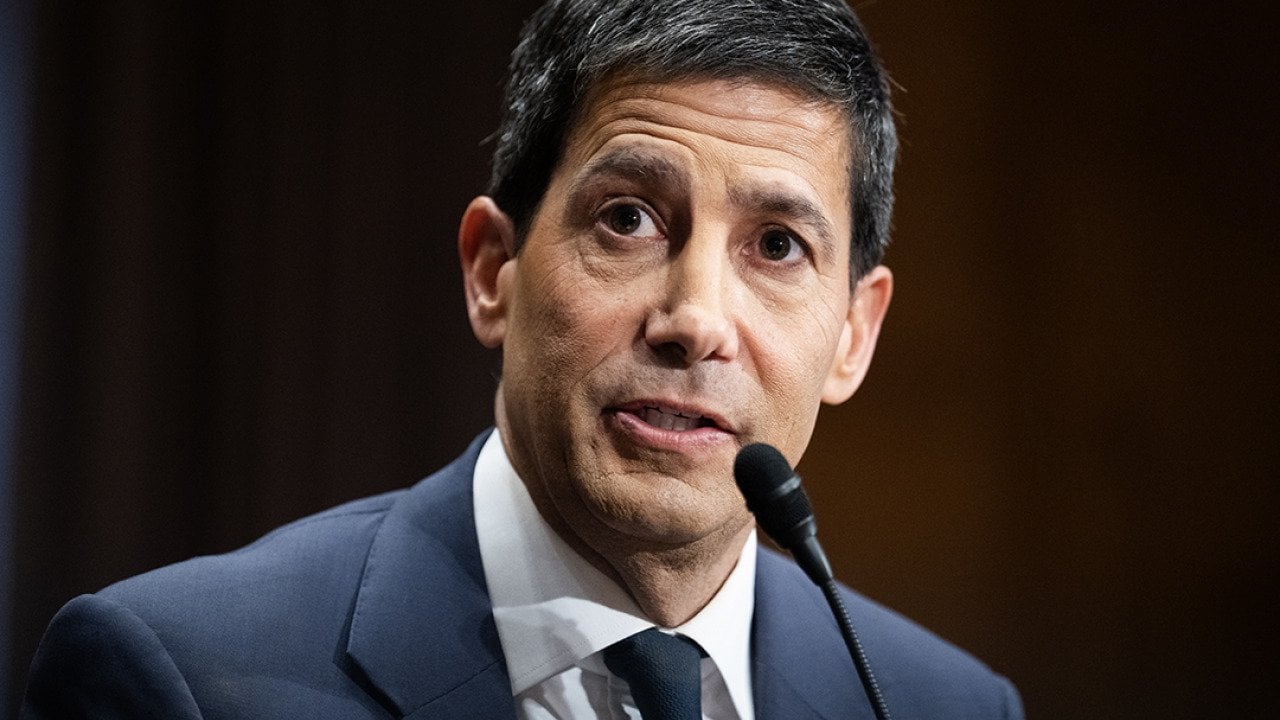
In mid-July, new Federal Reserve Chair Kevin Warsh testified before two congressional committees and pledged to restore annual inflation to the central bank’s stated target of 2%. Given that inflation, as measured by the personal consumption expenditures (PCE) index, has been above that mark for 63 consecutive months, Warsh has some work ahead of him.
The Fed has a statutory mandate to stabilize prices, alongside its twin objective of maximizing employment. Since 2012, the bank has chosen to balance the two mandates by publicly aiming for a stable target of 2% annual inflation.
Inflation flickered below 2% for much of the 2010s, but it spiked dramatically in 2021 and 2022 as America emerged from the COVID-19 pandemic and both Donald Trump and Joe Biden spearheaded massive fiscal stimulus packages. To understand why the Fed is still committed to its 2% goal after over five years of running above it, examining the history and economic reasoning behind the target is in order, which The Dispatch explores here.
Why set a public inflation target?
The Fed’s price-stabilizing role formally began in 1977, when Congress passed the Federal Reserve Reform Act near the tail end of the Great Inflation, a 17-year period in which annual inflation rates spiked as high as 14%. Paul Volcker, the Fed chair at the time, began aggressively raising interest rates and succeeded in curbing inflation, but the interest rate hikes triggered unforeseen consequences. Unemployment spiked, and the economy plunged into a recession. The episode demonstrated that the Fed’s use of monetary policy could shape economic conditions.
When Alan Greenspan assumed the role of Fed chair in 1987, he commissioned a series of debates at the Federal Open Market Committee (FOMC) about setting an exact inflation target. Proponents of the policy argued it would anchor the public’s expectations even through periods when the Fed would adjust interest rates away from the target value, limiting aftershocks. As the Fed’s website puts it, “When households and businesses can reasonably expect inflation to remain low and stable, they are able to make sound decisions regarding saving, borrowing, and investment, which contribute to a well-functioning economy and the well-being of all Americans.”
Inflation targeting was first adopted in 1990 by New Zealand, which set a band of 05 to 2% for its central bank to keep inflation within. By 1993, Australia, Canada, Finland, Singapore, Sweden, and the United Kingdom had joined it in adopting an official inflation target.
By 1996, Greenspan was convinced that a 2% target was broadly consistent with price stability. However, he did not want that number to be public knowledge, as he felt it might burden the Fed to make decisions that were not in the economy’s best interest to avoid having to explain its deviation from the target. It took until Ben Bernanke’s tenure as Fed chair to enshrine the target as the central bank’s official policy in 2012.
“Greenspan was in favor of maximum flexibility, so if you don’t have a stated target, no one can say you’re missing your target,” David Wessel, the director of The Hutchins Center on Fiscal and Monetary Policy at the Brookings Institution, told The Dispatch. “Bernanke had exactly the opposite argument. This is a way to hold the central bank accountable. It tells … the markets and the politicians, ‘This is what we want to do. And if we’re not meeting our target, you should ask us why not.’”
Why 2%?
At a 1996 FOMC meeting, Greenspan defined price stability as “that state in which expected changes in the general price level do not effectively alter business or household decisions.” Pressed by then-Fed governor and future chair Janet Yellen to put a number on that state, Greenspan replied, “I would say the number is zero, if inflation is properly measured.”
Greenspan’s point, as he articulated in greater depth a year later, was that most inflation measures do not properly account for the improved quality and longevity of new products, which ultimately save the consumer money. “In theory, economists understand how to value such innovations; in practice, it is an enormous challenge to construct such an estimate with any precision,” Greenspan said in the 1997 speech. Indeed, figuring out what value of inflation by conventional measures best represents a true value of zero is far from straightforward.
The Fed uses the PCE index to track inflation, while the consumer price index (CPI) numbers typically attract more press coverage. The CPI measures the out-of-pocket expenditures of all urban households on a representative basket of goods and services. The PCE measures prices for a broader range of goods and services purchased by consumers or on their behalf, including expenditures by some nonprofit groups serving households and third-party payments like employer-provided health insurance. The CPI tends to slightly outrun the PCE because the two indexes use different formulas, and the PCE more fully accounts for consumers substituting cheaper goods in response to rising prices. But some economists claim both overmeasure real inflation (Warsh has called these measures “imperfect” and said he prefers “trimmed” mean inflation gauges, which remove the most extreme outliers in price change from the dataset).
As the first nation to implement a public inflation target, New Zealand had a significant influence in setting a precedent for the policy. But even by the account of those who were intimately involved in crafting the target, the number was not settled upon by exact science. “It was a bit of a shock to everyone,” Roger Douglas, the country’s former finance minister who is considered a chief architect of the policy, told Reuters in a 2023 interview. “I just announced it was gonna be 2%, and it sort of stuck.”
New Zealand achieved its goal of bringing inflation below 2% within the first two years of its plan. From there, several other countries followed, adopting inflation targets around 2%. “The central banks move in herds, and once a few did it, then the U.S. adopted it, everybody kind of adopted it,” Wessel said. “Now it’s kind of accepted, even though there’s no economic model or particular rationale for why 2 versus 1.5 or 3.”
Yet, while 2% may not have resulted from a precise formula, it did represent something real. Essentially, economists concluded that any meaningfully higher target would too consistently erode purchasing power, a phenomenon that has come to define American politics over the past five years. Conversely, any meaningfully lower target would come with the risk of deflation, which would likely trigger a vicious cycle of reduced spending, increased debt burdens, falling wages, and increased unemployment. Keeping the target above zero also makes it easier for employers to effectively reduce real wages during economic downturns as an alternative to laying off workers, without the political friction that comes with nominal wage cuts.
Given the Fed’s statutory mandate to balance price stability with maximum employment, the 2% number was seen as a happy medium between the two.
Is 2% still a useful number?
What American central bankers likely did not anticipate was that they would spend much of the decade after the 2008 financial crisis struggling to raise the inflation rate back to their 2% target. For seven years from December 2008 to December 2015, interest rates were at near-zero levels, meaning the Fed had little room to stimulate the economy through its rate-setting mechanism.
Because the federal funds rate is a nominal interest rate, had the Fed set a higher inflation target, that would have resulted in higher interest rates during normal conditions and given the Fed more policy leverage.
“When the 2% target was picked, nobody contemplated long periods of time when interest rates would be at zero,” Wessel said. “It seemed like something that would never happen. So, given that, I would think that if you were starting over again and you knew everything that’s transpired, you’d pick a slightly higher target—maybe 2.5 or 3, or a range like 2 to 3%.”
Nevertheless, Wessel and many economists contend that any shift away from the 2% target at this point would be a major blow to the Fed’s credibility. In a 2023 article for the Council on Foreign Relations, former Fed Vice Chair Roger Ferguson argued that even if there was wisdom in raising the target, such a move might undermine the Fed’s fight to lower inflation. “One of the Federal Reserve’s main aims is to keep inflation expectations anchored in the public,” Ferguson wrote. “Completely abandoning an inflation target in the middle of a battle against high inflation might do the opposite, thus raising people’s long-term inflation expectations.”
Despite annual inflation stabilizing since its peak in 2022, the specter of rising prices remains a significant political liability for President Donald Trump. May’s PCE numbers saw inflation rise to 4.1%, partially because of elevated oil prices resulting from the Iran war. But Trump brushed off that bump, saying “the numbers were great.” And while he frequently pressured the most recent Fed chair, Jerome Powell, to lower interest rates, reports indicate that Trump is allowing Warsh a grace period as he begins his tenure. With Warsh publicly reaffirming the Fed’s target, the 2% goal appears stable for now.
This story was produced by The Dispatch and reviewed and distributed by Stacker.



