AndaSeat Details MANA Series Design for Work, Gaming and Shared Home Desk Use
AndaSeat Details MANA Series Design for Work, Gaming and Shared Home Desk Use SPOKANE, WA, UNITED STATES, July 30, 2026

Press Release Disclaimer: This is a press release distributed through the XPR Media network. It has not been independently verified by our newsroom.

AndaSeat Details MANA Series Design for Work, Gaming and Shared Home Desk Use
SPOKANE, WA, UNITED STATES, July 30, 2026 /EINPresswire.com/ — AndaSeat today released a workspace configuration guide for rooms where one computer setup is used for work, study, gaming, communication and media viewing. The guide uses the MANA Series to show how chair dimensions and adjustment ranges can be reviewed alongside the desk, floor space and equipment already in the room.
The guide documents a planning process rather than one sitting position. As users move between typing, calls, controller-based gaming and media viewing, the distance from the desk, arm position and backrest contact can change.
The guide does not describe the MANA Series as a medical device or posture-correction system. Product details are presented as measurements and mechanical functions for home offices, bedrooms and shared study spaces.
Planning Starts With the Room and Desk
The first part reviews desk height, clearance beneath the work surface, available floor depth and the distance between the desk and nearby walls or storage.
A chair may fit under a desk but still require room for its base, casters and reclining backrest. In a smaller room, that movement can affect access to drawers, doors or walkways. The guide therefore considers the chair in its working position.
Seat height changes the relationship among the feet, knees, work surface and armrests. Armrest height affects whether the forearms meet the pads and whether the chair can move close enough to the desk. The selected backrest angle can also change the user’s distance from the keyboard, screen or controller.
Total height does not determine fit by itself. Torso length, upper-leg length, shoulder width and sitting depth can change where the seat edge, lumbar area and armrests meet the body.
“Mixed-use computer spaces are planned around several connected measurements, not one isolated product,” said Lin Zhou, CEO of AndaSeat. “This guide sets out a sequence: review the room, check the desk relationship, and then adjust the chair according to the activity and the person using the space.”
The guide also considers how the workstation may be shared. A chair adjusted for one person may require changes when another person uses the same desk. Seat height, armrest position and backrest angle can be reviewed separately instead of treating the chair as a fixed part of the room.
This approach is intended to make the planning process easier to document. Room measurements can be recorded before installation, while chair settings can be reviewed after the desk, display and input devices are in place.
Independent Controls Reflect Different Activities
The second part explains why the MANA Series uses separate controls for seat height, armrest height, backrest angle and rocking resistance. A change in one area does not always require the entire chair to be reconfigured.
Keyboard and mouse work often places the hands forward and closer to the work surface. Controller use can bring both hands inward and nearer the torso. Calls, reading and video viewing may involve greater backrest contact or a wider angle between the torso and thighs.
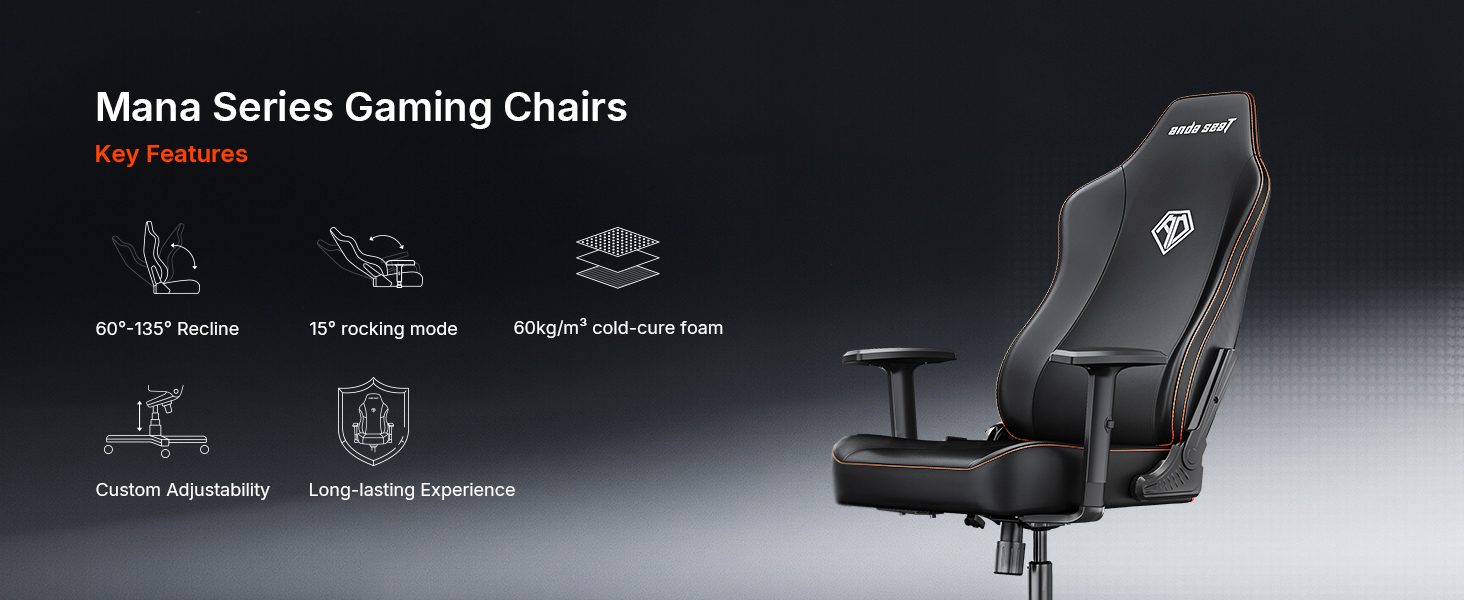
The MANA backrest moves from 90 degrees to a maximum recline angle of 135 degrees and can be secured at selected points within that range. A separate rocking function provides up to 15 degrees of movement, with resistance adjusted through the tilt mechanism.
Recline creates a larger change in backrest angle, while rocking allows smaller movement around the selected position. Neither function determines an appropriate posture, and movement within the chair is not equivalent to leaving the seated position.
The armrests provide approximately 10 cm of vertical adjustment. They can be raised or lowered in relation to the desk, elbow position and selected input device. Their movement is limited to height adjustment.
Seat height is adjusted through a seat-height gas lift. This changes the relationship between the chair, desk and floor but does not establish the same arrangement for every user. Foot position, leg length and desk clearance remain part of the setup.
Because these controls operate separately, the backrest angle can change without changing armrest height, and seat height can change without altering the lumbar shape. The guide presents this separation as a way to review each setting when the activity or user changes.
The controls are manually operated and do not monitor sitting behavior or make automatic changes. The selected configuration remains dependent on the room, desk, equipment and person using the workstation.
MANA Series Provides a Defined Planning Example
The third part records the main MANA Series specifications used in the example. The lower section of the backrest contains an integrated lumbar curve measuring approximately 45 mm. The curve remains part of the structure whether or not the removable lumbar pillow is installed.
The measurement describes the backrest profile. It does not guarantee a health outcome or the same contact for every person. Torso length, sitting depth, clothing and individual preference can affect how the lower section meets the back.
The seat uses molded cold-cure foam with a stated density of 60 kg per cubic meter. Foam density identifies one material specification but does not independently determine how a seat will feel or how long it will retain a particular condition.
Beneath the seat and upholstery, the chair uses a steel internal frame, a five-point nylon base and 60 mm polyurethane-coated casters. AndaSeat states a maximum user weight of 136 kg, or 299 pounds, and a recommended user-height range of approximately 155 to 185 cm. These figures describe the intended product range, while fit may vary by body proportions.
The MANA Series is produced with PVC leather or linen upholstery. The surface choice does not change the stated recline range, rocking range, foam density, lumbar contour or frame structure.
The removable lumbar and headrest pillows provide additional contact surfaces but are separate from the chair’s internal frame. Their use and position can be changed according to the person using the chair.
The guide concludes that chair specifications are most useful when considered with the complete workstation. The desk, screen, input devices, floor area, storage and movement space all influence how a computer area functions during the day.
AndaSeat said the MANA Series is included as an example because its principal controls can be reviewed separately: the backrest changes angle, the rocking mechanism changes resistance, the armrests change height and the gas lift changes the seat’s relationship to the desk and floor.
The company’s broader position is that mixed-use spaces should be documented through measurements and available settings rather than a single prescribed arrangement. The MANA configuration guide provides a reference for explaining those measurements without presenting furniture as a healthcare solution or making guarantees about individual experience.
About AndaSeat
Founded in 2007, AndaSeat develops seating, desks, monitor arms and related workspace products for professional, gaming, study and home environments.
Caroline Chen
AndaSeat
+86 139 2232 2347
email us here
Visit us on social media:
LinkedIn
Instagram
Facebook
YouTube
TikTok
X
Legal Disclaimer:
EIN Presswire provides this news content “as is” without warranty of any kind. We do not accept any responsibility or liability
for the accuracy, content, images, videos, licenses, completeness, legality, or reliability of the information contained in this
article. If you have any complaints or copyright issues related to this article, kindly contact the author above.

Media gallery