
Johnson Auto Body Shares What Drivers Should Know Before Driving a Vehicle After an Accident
Knightdale, NC - November 25, 2026 - PRESSADVANTAGE - Johnson Auto Body Inc., an independent collision repair facility

Press Release Disclaimer: This is a press release distributed through the XPR Media network. It has not been independently verified by our newsroom.
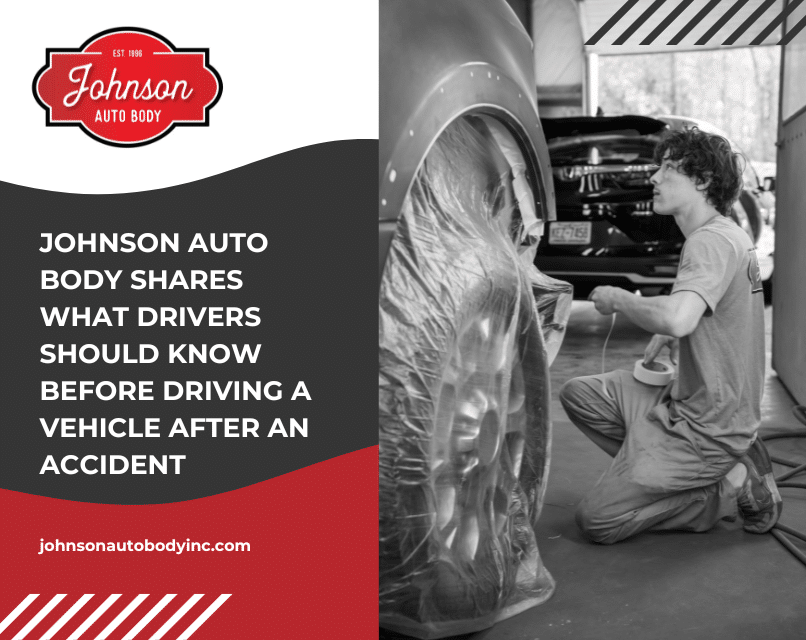

Knightdale, NC – November 25, 2026 – PRESSADVANTAGE –
Johnson Auto Body Inc., an independent collision repair facility in Knightdale, North Carolina, is sharing consumer safety guidance to help drivers recognize when a vehicle may be unsafe to operate following an accident. The November guidance identifies warning signs involving fluid leaks, steering and suspension damage, compromised safety equipment, and electronic systems that may require professional inspection before a vehicle returns to the road.
As Thanksgiving travel approaches and more drivers prepare for holiday trips, understanding the condition of a vehicle after a collision becomes especially important. Even relatively minor accidents can affect mechanical or safety-related components that are not immediately visible. Johnson Auto Body is encouraging Knightdale and surrounding Wake County drivers to evaluate potential hazards before deciding whether to drive a damaged vehicle or arrange professional towing.
The company’s November guidance focuses on five warning signs that drivers should recognize after an accident. These include fluid leaks, steering or suspension problems, damaged exterior components, compromised occupant protection equipment, and unusual electronic system behavior.
The first warning sign involves fluid leaks, smoke, or unusual odors. A collision can damage cooling systems, fuel lines, brake components, or other mechanical assemblies, potentially causing fluids to escape beneath the vehicle. Unidentified leaks, smoke, or burning smells may indicate conditions requiring immediate professional attention.
Drivers should avoid operating a vehicle when they suspect a fuel leak, brake system damage, or another condition that could create an immediate hazard. If the vehicle cannot be moved safely, professional towing may be the more appropriate option. Personal safety and the surrounding traffic environment should take priority over attempts to inspect or move damaged equipment.
The second warning sign involves steering, suspension, and wheel damage. Impacts involving curbs, other vehicles, or roadside objects may affect tires, wheels, steering components, or suspension mounting locations. These conditions can influence vehicle handling even when exterior damage appears limited.
A visibly damaged tire, bent wheel, unusual wheel position, or sudden change in steering response should prompt further evaluation. Drivers may also notice vibrations, pulling to one side, or unfamiliar noises following an accident. When these symptoms suggest compromised vehicle control, continuing to drive may create additional risks.
Through its collision repair services, Johnson Auto Body addresses accident-related damage using inspection findings and structured repair planning. The company emphasizes that mechanical and structural concerns should be evaluated according to the affected vehicle rather than judged solely by exterior appearance.
The third warning sign involves damaged body panels, lighting, and visibility-related components. A displaced bumper, loose fender, or damaged hood may interfere with moving parts or become detached while the vehicle is operating. Broken headlights, taillights, mirrors, or windshield glass can also affect visibility and communication with surrounding motorists.
Drivers should check whether damaged components obstruct their view, interfere with wheel movement, or prevent doors and hoods from closing securely. These conditions may require repair before the vehicle can be operated normally. A vehicle that remains mechanically functional is not necessarily suitable for continued driving.
The fourth warning sign involves occupant protection equipment. Airbags, seatbelt pretensioners, impact sensors, and related components are designed to respond to specific collision conditions. Depending on the accident and manufacturer requirements, certain components may require inspection or replacement even when their condition is not immediately apparent.
Airbag deployment is a particularly important reason to seek professional evaluation before returning a vehicle to normal operation. Damaged seatbelt assemblies, restraint-system warning lights, or other indications of occupant protection system concerns should also be addressed. The absence of deployed airbags does not automatically establish that every restraint-related component is unaffected.
The fifth warning sign involves electronic safety systems and dashboard alerts. Modern vehicles may contain cameras, radar sensors, and electronic control modules supporting automatic emergency braking, lane departure warnings, blind spot monitoring, and other driver-assistance features. Collision forces or damage to mounting locations can affect these components without producing obvious exterior symptoms.
Dashboard warning lights may provide useful information about certain electronic conditions, but their absence does not confirm that all systems are functioning correctly. Depending on the vehicle and damage involved, manufacturer procedures may require diagnostic scanning, component inspections, or calibration.
Johnson Auto Body’s repair process includes diagnostic scanning and structural assessment when applicable. These procedures can help identify conditions requiring additional evaluation and determine whether specialized services are necessary.
The November guidance also explains why professional inspection may be important after a low-speed accident. Bumper covers, exterior panels, and trim can conceal reinforcement components, brackets, wiring, and other parts affected by collision forces. Some damage becomes apparent only after technicians remove components or perform further inspections.
Johnson Auto Body provides auto body repair services involving exterior restoration, structural damage assessment, refinishing, and repair planning. The appropriate scope of work depends on the actual damage, vehicle construction, and applicable manufacturer requirements.
Another important distinction involves whether a vehicle can be driven to a repair facility and whether it has been fully repaired. A damaged vehicle may remain capable of moving under its own power while still requiring structural correction, mechanical repairs, electronic system evaluations, or other restoration work. Drivability alone should not be treated as proof that a vehicle is safe for normal use.
When uncertainty remains, arranging professional towing is generally the more cautious choice, particularly when damage may affect braking, steering, tires, fuel systems, or occupant protection equipment. Drivers should not attempt to test a potentially unsafe vehicle on public roads to determine whether a problem exists.
After addressing immediate safety concerns, vehicle owners can document visible damage and report the accident to their insurance provider when appropriate. Photographs, accident details, and observations about changes in vehicle behavior may assist with the repair assessment. Drivers should also explain any warning lights, unusual sounds, or handling concerns noticed after the collision.
For Knightdale and surrounding Wake County communities, the November guidance offers a practical approach to post-accident decisions. Drivers should first confirm that everyone is safe, identify obvious vehicle hazards without placing themselves at risk, and arrange professional assistance when the vehicle’s condition is uncertain.
The central message is that visible damage does not always reveal the full effect of a collision. Recognizing warning signs and obtaining appropriate professional evaluations can help drivers avoid operating vehicles with potentially compromised mechanical or safety-related components.
Johnson Auto Body is sharing this November consumer guidance to help drivers make informed decisions before returning damaged vehicles to the road, particularly as holiday travel increases the importance of reliable transportation. Additional information about collision repair services and damage assessments is available through Johnson Auto Body in Knightdale.
About Johnson Auto Body Inc.
Johnson Auto Body Inc. is an independent collision repair facility established in 1996 and located at 821 H & R Drive, Knightdale, NC 27545. The company provides collision repair, auto body repair, structural restoration, automotive refinishing, and related vehicle restoration services for drivers in Knightdale and surrounding Wake County communities. Johnson Auto Body emphasizes professional repair planning, manufacturer-informed procedures, customer communication, and coordination of necessary repair operations.
###
For more information about Johnson Auto Body Inc, contact the company here:
Johnson Auto Body Inc
Todd McGee
(919) 217-2887
todd@johnsonautobodyinc.com
821 H and R Dr, Knightdale, NC 27545


