Nobel Prize in Chemistry Awarded for Molecular Chirality Breakthrough
The Nobel Prize in Chemistry was awarded in Stockholm to Henri B. Kagan and Kenso Soai for their significant contributions to understanding and manipulating the mirror-image forms of molecules, a breakthrough vital for drug development.

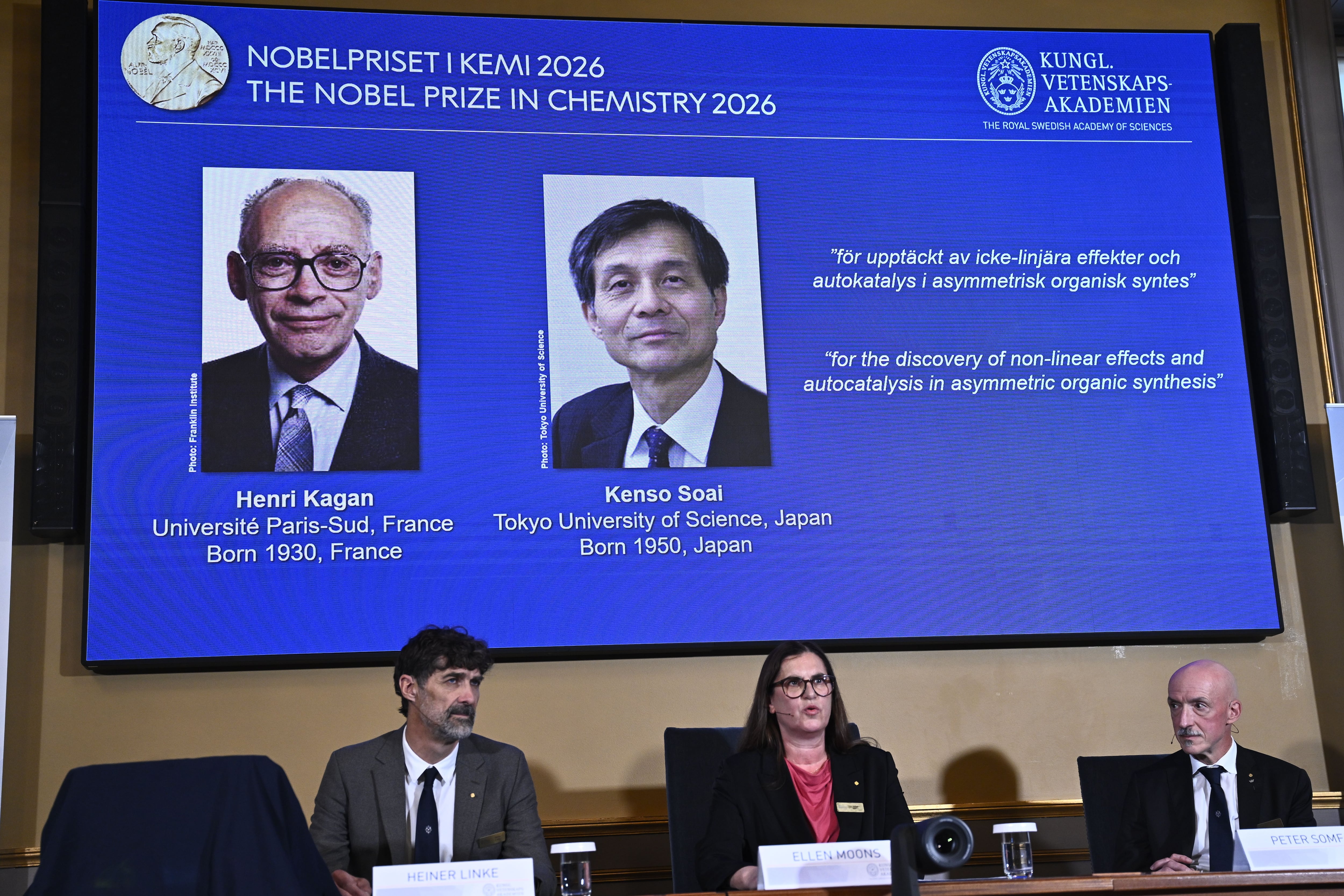
 Philadelphia, PA, October 7, 2026 — The Nobel Prize in Chemistry has been awarded in Stockholm to Henri B. Kagan and Kenso Soai. The prestigious award recognizes their significant contributions to the field of molecular chirality, specifically for their work in understanding and manipulating the mirror-image forms of molecules.
This scientific advancement is considered vital for the development of new drugs and pharmaceuticals. Chirality, in chemistry, refers to the property of a molecule that is non-superimposable on its mirror image, much like a left hand and a right hand. These different forms, known as enantiomers, can have vastly different biological effects.
For example, one enantiomer of a drug might be therapeutically beneficial, while its mirror image could be ineffective or even harmful. The research conducted by Kagan and Soai has provided fundamental insights and methodologies for controlling and synthesizing these specific molecular forms, a critical step in creating safer and more effective medicines.
The details regarding the specific methodologies developed by the laureates, the exact timing of their key discoveries, and the full extent of their impact on specific drug development projects were not provided in the summary. However, the award underscores the importance of fundamental chemical research in advancing medical science and improving human health.
The ceremony took place in Stockholm, the traditional venue for the Nobel Prizes, where the laureates were honored for their groundbreaking work.
Story summarized from the original created by Adithi Ramakrishnan, Kostya Manenkov and Stefanie Dazio on www.inquirer.com, see more information here.
Media gallery